Blog
How solar panels work, from sunlight to socket
Solar panels turn daylight into electricity you can use at home, and the process is simpler than most people expect.
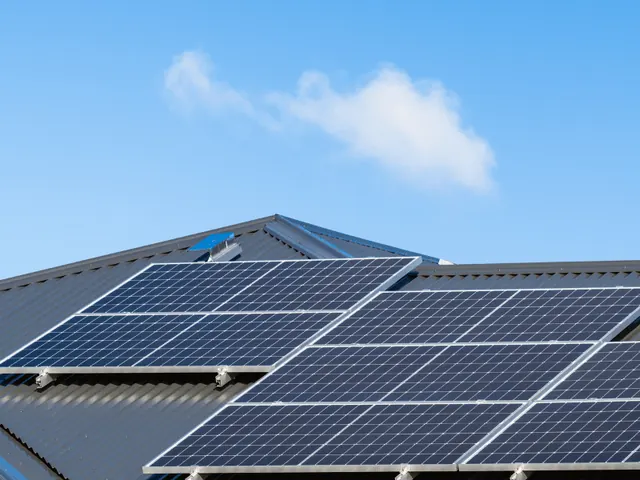
People often ask me whether solar panels need direct heat to work. They don't. Panels respond to light, not warmth, which is why they keep producing on a mild day and can lose a little efficiency when they get very hot. Once you understand the few steps between the sun and your kitchen light, the rest of a solar quote makes a lot more sense.
Inside a solar cell
A solar panel is a grid of small cells, and each cell is a thin sandwich of treated silicon. The two layers are prepared differently so that one has a surplus of loosely held electrons and the other has a shortage. Where they meet, an electric field forms.
When sunlight hits the cell, its energy knocks electrons loose. The built-in field pushes them in one direction, and that steady flow of electrons is an electric current. Metal contacts on the surface collect it. This is called the photovoltaic effect, and it has no moving parts, which is a big reason panels last so long.
Why the current needs an inverter
The electricity coming off a panel is direct current, or DC, where the flow runs one way. Your home runs on alternating current, or AC, where the flow reverses many times a second. An inverter sits between the two and converts DC into AC.
There are two common setups:
- A string inverter, one central unit that handles a whole row of panels wired together.
- Microinverters, small units fitted behind each panel, so every panel converts its own power.
Each has trade-offs. Microinverters let panels work independently, which helps when part of your roof is shaded. A string inverter is simpler and often cheaper. A good installer will explain which suits your roof and why.
Where the power goes
Once converted, the electricity flows into your main electrical panel and your appliances use it first. If your panels make more than you're using at that moment, the extra can go to the grid, depending on your utility's rules. When the panels aren't producing enough, you draw from the grid as normal.
That last point answers a common worry. A grid-connected system doesn't leave you without power when a cloud passes over. The grid fills the gap.
What happens at night and on cloudy days
Panels produce nothing at night, because there is no light to work with. On cloudy days they still produce, just less than they would in full sun. Output also changes with the season, the angle of your roof and the direction it faces.
This is why a design visit matters. Shade from trees or a chimney, even on one corner of an array, can reduce what the system produces, and a good design plans around it.
Where batteries fit in
A battery stores spare daytime electricity so you can use it later, for example in the evening. It can also keep selected circuits running during a power outage, which a grid-connected system without a battery generally cannot do for safety reasons.
Not every home needs one. It's worth thinking about what you'd want to keep running in an outage, and whether the utility's rules for sending power back to the grid make storage attractive in your case.
What you need to look after
Solar needs little attention, but it isn't zero. A few habits help:
- Check your monitoring app now and then so you notice a drop in output early.
- Keep nearby trees trimmed so new shade doesn't creep onto the array.
- Have the system looked at if the inverter shows a fault or output suddenly falls.
- Call a solar contractor before any roofing work, since panels have to be removed and reinstalled properly.
Rain does a reasonable job of keeping panels clean in most places. If you see a heavy build-up of dust or debris, ask your installer before climbing up to clean them yourself.
Putting it together
Sunlight hits the cells, the cells make DC, the inverter turns it into AC, and your home uses it. A battery, if you have one, stores the spare. Every quote you receive is a variation on that chain, so the useful question is how well each piece is matched to your roof and your power use.
If you're weighing up a system for your own home, take a look at our solar panel and battery service and we'll walk you through the options.
Curious what solar would do for your home?
We'll look at your roof and your bills, then give you an honest written quote.