Blog
A homeowner's guide to solar pool heating
Solar pool heating uses sunlight to warm your water directly, so you can swim comfortably for more of the year.
A pool that is a few degrees too cold often goes unused. Solar pool heating is one of the simplest ways to fix that, because it needs very little equipment and almost nothing to run. It is also quite different from the solar panels that make electricity, which causes some confusion, so let's start there.
How it works
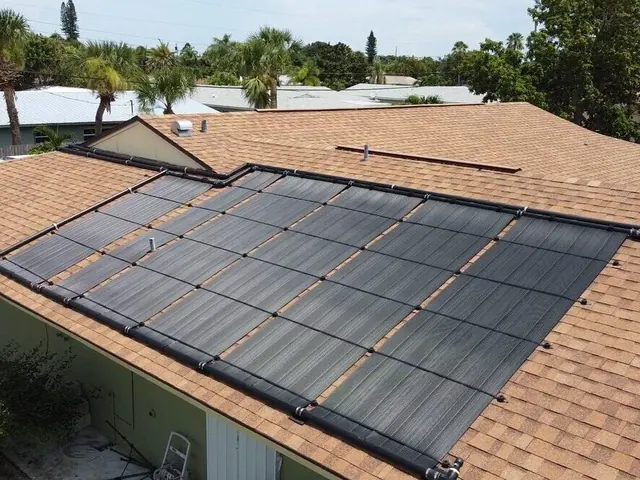
Solar pool heating uses collectors, usually flat black panels made of durable plastic or rubber, mounted on a roof or a rack. Your existing pool pump pushes water through them. As the water passes through many small channels, the sun warms the collectors and the collectors warm the water. The heated water then returns to the pool.
A few pieces make this work:
- The collectors, which absorb heat from the sun.
- A flow control valve, which sends water to the roof only when it will actually gain heat.
- Plumbing that connects the collectors to your existing pump and filter.
- A controller or sensor, which tells the valve when to open.
Because the pump is already running to filter your pool, the extra running cost is small.
How it differs from solar electric panels
Solar electric panels convert light into electricity. Pool collectors don't generate any electricity at all. They simply move heat from the sun into water. That makes them simpler, with fewer components that can fail, and the two kinds of system can sit on the same roof without interfering with each other.
What affects how well it performs
Several factors decide how much warmth you'll gain:
- Roof direction and tilt: a surface facing the sun for most of the day does best.
- Shade: trees or nearby buildings that block the collectors will cut the heat gained.
- Collector area compared with pool surface: a larger pool needs more collector area.
- Wind and air temperature: a breezy, cool day pulls heat off the pool surface.
- Whether the pool is covered: a cover reduces heat lost overnight.
You don't need to work these out yourself. A site visit usually covers all of them in a single look at your roof and your pool.
Sizing the system
A common rule of thumb is that the collector area should be a meaningful fraction of the pool's surface area, with sunnier and more exposed sites needing less. The right answer depends on your roof and how warm you want the water. An installer who quotes a size without seeing your roof is guessing, so ask for a visit.
Maintenance and what to watch for
Solar pool heaters are low-maintenance, but they are not maintenance-free. It helps to:
- Keep your pool chemistry balanced, since poor water balance can damage the collectors and plumbing over time.
- Check the roof now and then for leaks at the connections or damaged collectors.
- Listen for changes in the pump or valve and watch for a drop in water temperature.
- Keep the collectors clear of leaves and debris.
If the water has stopped warming, a failed valve or a blocked collector is a common cause, and both can be fixed without replacing the whole system.
Good questions to ask before you buy
Ask for the expected temperature gain in your own conditions, not a general promise.
Also ask who handles the roof work and plumbing, what the workmanship warranty covers and how the system will be drained or protected if temperatures drop. A reputable installer will answer these without hesitation, and will tell you if your roof isn't a good fit.
Is it worth it?
For many homes, yes. Once installed, the system uses sunlight for heat, and you'll typically notice a longer swimming season. The result depends on your site, so treat any estimate you're given as an informed range, not a guarantee.
If you'd like to see what a system could mean for your pool, you can read about our solar pool heating service, or ask us to take a look at your roof.
Ready for a warmer pool?
We'll visit, look at your roof and pool, and send a written quote with no pressure.